NATURAL WINE GUIDE · THE CELLAR
What is orange wine?
By Lambert Perera, winegrower at Sans Domaine ·
Orange wine, or skin-contact wine, is made from white grapes fermented on their skins, as if they were red. In Catalan there has always been a word for it: brisat.
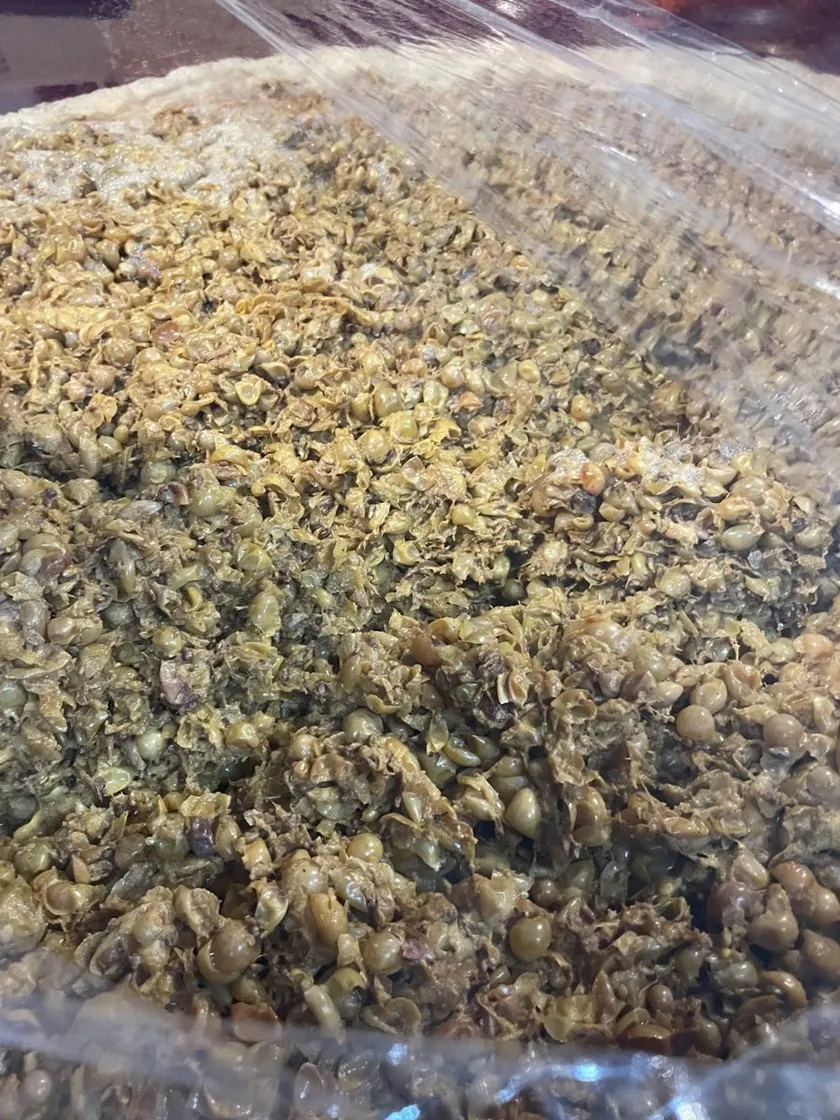
A white made like a red
For a classic white, the grapes are pressed straight away and only the juice ferments. For an orange wine, the must ferments with the skins for days or weeks. The skins add colour, texture and aroma: the wine comes out golden, amber or orange, with a little tannin, like peach skin on the palate.
It isn’t a new fad. In Penedès, farmhouse wines were often made this way, and in Georgia people have made it in buried clay jars for thousands of years. What is new is the name “orange wine”.
How I make mine
Jane is Xarel·lo from 1969 vines, 12 days on skins. I don’t press: I keep only the free-run juice, so it is a gentle skin-contact wine with fine texture.
Orange25 is Macabeu made by carbonic maceration: whole bunches ferment for 16 days on their skins in a closed tank. It is my fullest-bodied orange wine.
And MacaVeu is an orange wine with bubbles: an ancestral-method Macabeu with 18 days on skins. All with no added sulphites, wild yeasts and no filtering.
How to drink it
Not too cold: 10–13 °C, so the texture and aromas can open up. If it smells odd when you open it, decant it and wait fifteen minutes. The next day, corked and in the fridge, it is often even better.
At the table it is very forgiving: vegetables, fish, cheese, tapas, even meat. It is the wine that rescues tricky dishes such as artichokes or asparagus.
FAQ
- Is orange wine the same as skin-contact wine?
- Yes: both mean white grapes fermented with their skins. In Catalan it is called brisat.
- Does orange wine have tannins?
- A little, from the skins. Less than a red: mostly a texture you feel on the palate.
- What temperature should I serve it at?
- 10–13 °C.