NATURAL WINE GUIDE · BUBBLES
What is pét-nat?
By Lambert Perera, winegrower at Sans Domaine ·
Pét-nat (pétillant naturel) is a sparkling wine bottled before it has finished fermenting. The remaining sugar ferments in the bottle and the gas can’t escape, so the bubbles make themselves. The technique is called the ancestral method.
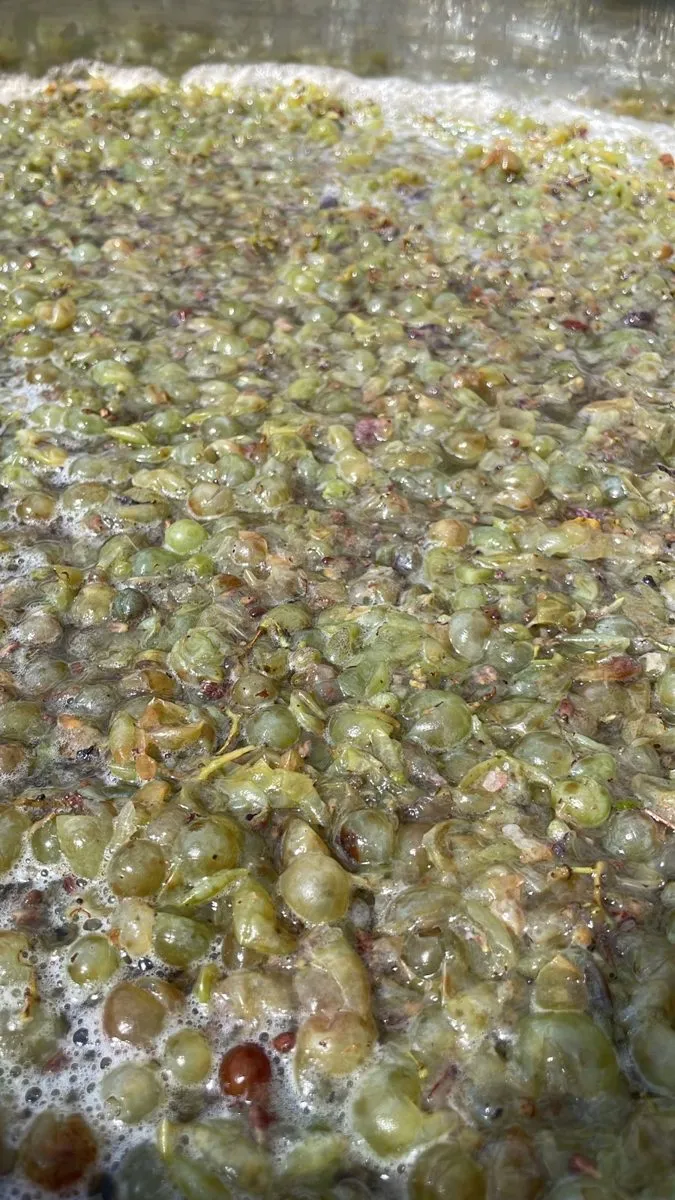
One fermentation, nothing added
It is the oldest way of making sparkling wine, long before Champagne. The must ferments with its own yeasts and, while there is still a little sugar left, I bottle and cap it. Fermentation finishes in the bottle and the carbon dioxide stays in the wine.
Champagne and Cava start from a finished wine, then add sugar and yeast for a second fermentation in bottle. In a pét-nat nothing is added: it is just grapes.
Alive, cloudy, every bottle a little different
Because I don’t filter it, fine lees can settle at the bottom: yeasts and bits of grape. So a pét-nat can be cloudy, and that is normal. The bubbles tend to be softer than in Cava, and can vary a little from bottle to bottle.
My pét-nats
Voyage Voyage is direct-press Parellada from Vinya de Cabra: soft, light and refreshing. MacaVeu is Macabeu with 18 days on skins: an orange pét-nat with texture and a wild streak. SOCA blends Merlot, Xarel·lo, Moneu and Garró into a sparkling rosé.
How to open a pét-nat
Well chilled, 6–8 °C, and without shaking it. The first time, open it over the sink: natural bubbles have character. For a clearer glass, stand the bottle upright for a day before opening so the lees settle.
FAQ
- Is pét-nat the same as ancestral method?
- Yes. Pét-nat is short for pétillant naturel, a wine made by the ancestral method.
- Why is it cloudy?
- Because it isn’t filtered: fine lees, yeasts and grape particles stay in suspension. It isn’t a fault.
- How is it different from Champagne?
- Champagne has a second fermentation with added sugar and yeast; pét-nat finishes its single fermentation in the bottle, with nothing added.