NATURAL WINE GUIDE · THE CELLAR
Wine with no added sulphites
By Lambert Perera, winegrower at Sans Domaine ·
All my wines have no added sulphites: from vineyard to bottle, I don’t add a single gram of sulphur. Here is what sulphites are, why almost everyone uses them, and how wine is made without.
What are sulphites?
Sulphites (sulphur dioxide, SO₂) are a preservative. In the cellar they protect wine from oxygen and microbes, and most wines contain them, added at several stages of winemaking.
But fermentation also produces a little naturally. So a completely “sulphite-free” wine doesn’t exist: the honest term is “no added sulphites”. In the European Union, labels must say “contains sulphites” above 10 mg per litre.
How to make wine without adding them
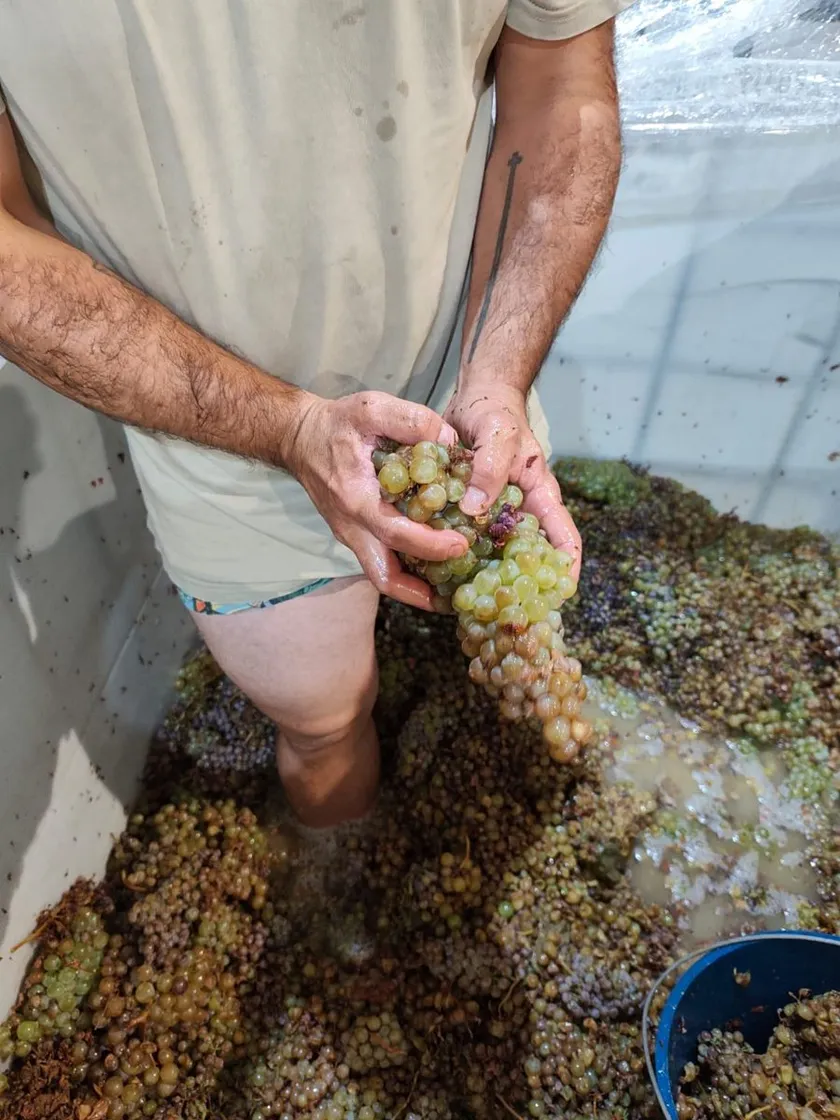
It starts in the vineyard. Healthy grapes from biodynamically farmed vines, picked by hand into small crates so they don’t get crushed. In the cellar: lots of cleaning, fermentation with the grapes’ own yeasts, and patience.
I don’t fine or filter: the fine lees protect the wine. And I bottle when the wine is ready, so each one carries on living in the bottle.
How to store it at home
Keep it somewhere cool and dark, away from heat: a wine without added sulphites is alive and doesn’t like temperature swings. Once open, re-cork it and put it in the fridge. It is often even better the next day.
If it smells odd when opened (boiled egg, struck match), that is reduction: the wine needs air. Decant it and wait fifteen minutes; it usually goes away.
FAQ
- Can a wine have no sulphites at all?
- Not entirely: fermentation produces a little naturally. What you can do is not add any, which is what I do.
- How should I store a wine without added sulphites?
- Somewhere cool and dark, without temperature swings. Once open, in the fridge.